If you’re wondering when to put out your hummingbird feeder, you’re not alone. Every spring, backyard birders ask the same questions: Is it too early? Too late? Will I hurt hummingbirds if I get the timing wrong?
The good news is that hummingbird feeder timing is more forgiving than most people think. This guide explains when to hang your feeder based on your region, what happens if you’re early or late, and how to choose a feeder that works well throughout the season.
The Short Answer
Put out your hummingbird feeder about two weeks before hummingbirds typically arrive in your area.
Hummingbirds migrate based on daylight and natural food sources, not backyard feeders. Putting a feeder out early won’t delay migration, and leaving it up a bit late won’t stop birds from moving on.
When to Put Out a Hummingbird Feeder by Region
| Region | Suggested Month(s) to Put Feeder Out |
|---|---|
| Southern U.S. (Gulf Coast, Texas, Florida) | Mid-February – Mid-March |
| Central U.S. (Midwest, Plains, Mid-Atlantic) | Mid-March |
| Northern U.S. & Southern Canada | Mid-April – Early May |
| Mountain West (Rockies, high desert, higher elevations) | Late April – Early May |
| West Coast (CA, OR, WA – lower elevations) | February – March |
Tip: Weather and elevation can shift arrival dates slightly, so being a little early is usually better than being late.
Is It Too Early to Put Out a Hummingbird Feeder?
In most cases, no.
If hummingbirds aren’t present yet, they simply won’t use the feeder. Early placement does not confuse birds or interfere with migration. Just be sure to keep nectar fresh and bring feeders inside overnight if freezing temperatures are expected.
What If You Put Your Feeder Out Too Late?
Hummingbirds won’t starve without your feeder. They rely on flowers, tree sap, and insects first. Feeders simply supplement natural food sources. That said, having a feeder ready early increases the chances of helping the first migrants passing through your yard.
Choosing a Feeder for Early Spring
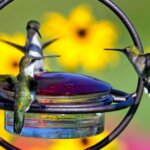
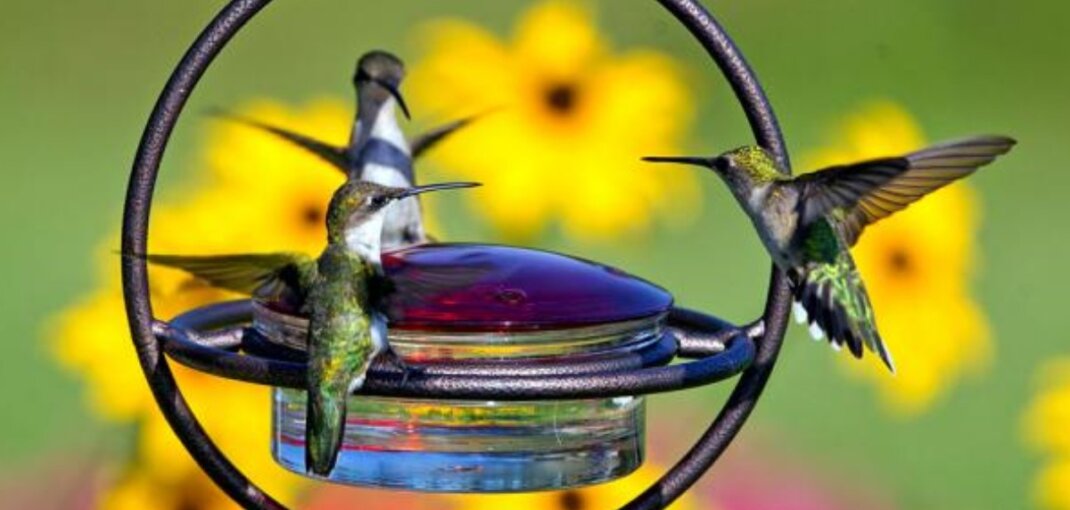
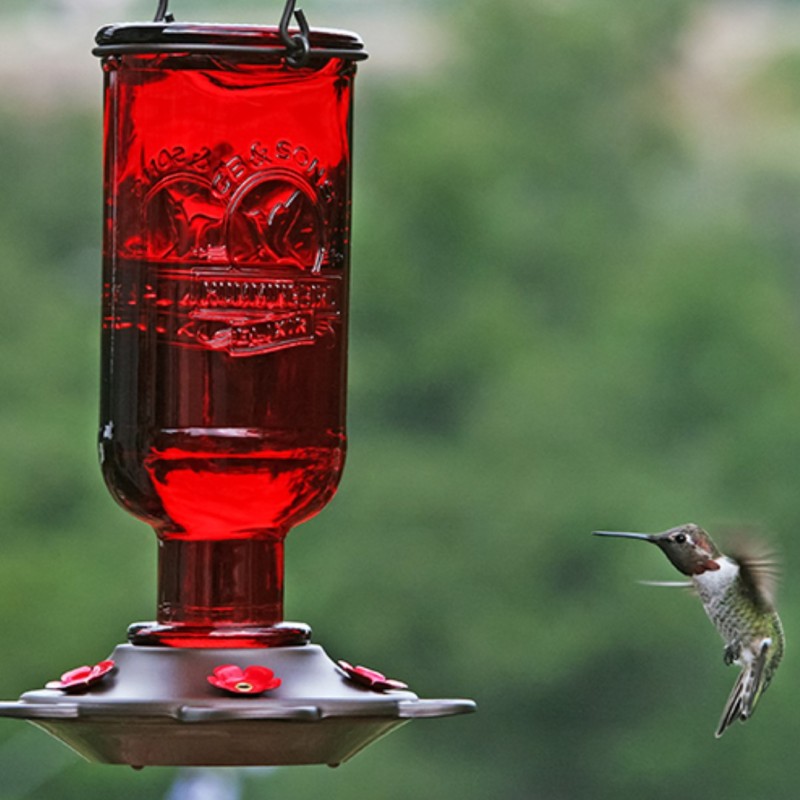
Simple designs are especially helpful early in the season because they’re easy to monitor, refill, and clean. Below is a classic design which uses an antique bottle. Its deep ruby red color is helpful in attracting hummingbirds of all kinds.
Managing Bees and Ants as Temperatures Warm
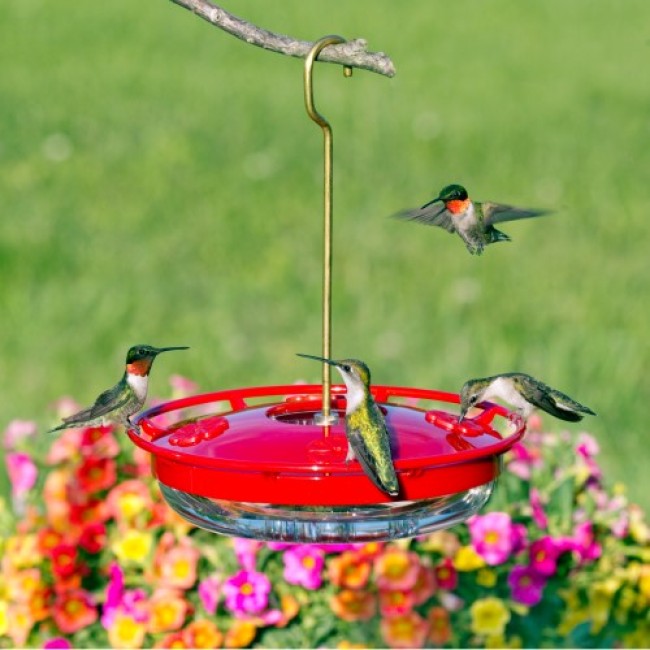
As spring progresses, insects become more active. A high-view hummingbird feeder designed to reduce bee and ant access can be especially helpful later in the season, when competition at feeders increases.
These feeders help keep nectar available for hummingbirds while limiting insect access without harming them.
Faceted Ruby Hummingbird Bird Feeder
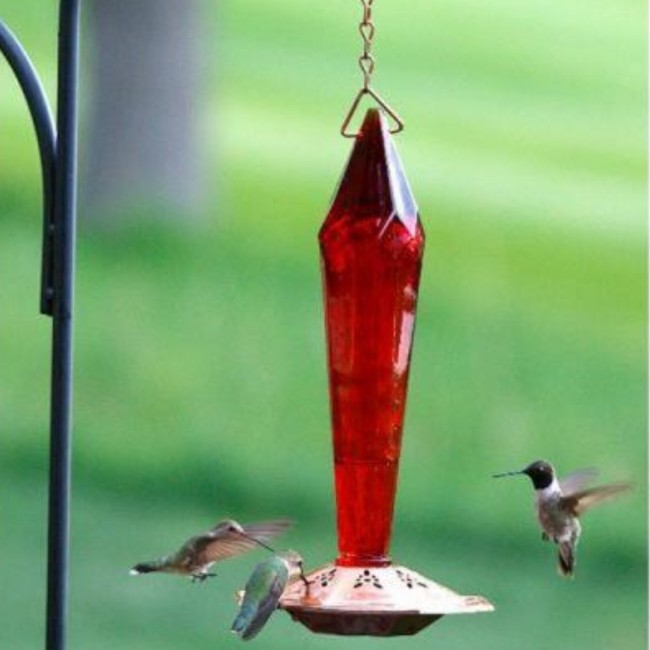
The Schrodt Faceted Ruby Hummingbird Feeder is a popular choice. Its handcrafted ruby-colored blown glass refracts sunlight which shines through a floral pattern at the base.
During warm weather, feeders should be cleaned every two to three days to prevent spoilage.
How Long Should You Leave Hummingbird Feeders Up?
Hummingbirds migrate based on changes in daylight, not food availability. Leaving feeders up will not stop migration.
A good rule of thumb is to leave feeders up two to three weeks after your last hummingbird sighting, which helps late migrants and stragglers refuel.
Final Thoughts
Knowing when to put out your hummingbird feeder doesn’t need to be stressful. Follow regional timing, keep nectar fresh, and choose feeders that are easy to maintain. Whether you’re early or a little late, providing a clean, reliable nectar source helps hummingbirds thrive throughout the season.